

My Journey to Cambridge: Applying for Chemical Engineering
🕒 Read time: 8 mins
Chemical Engineering at Cambridge
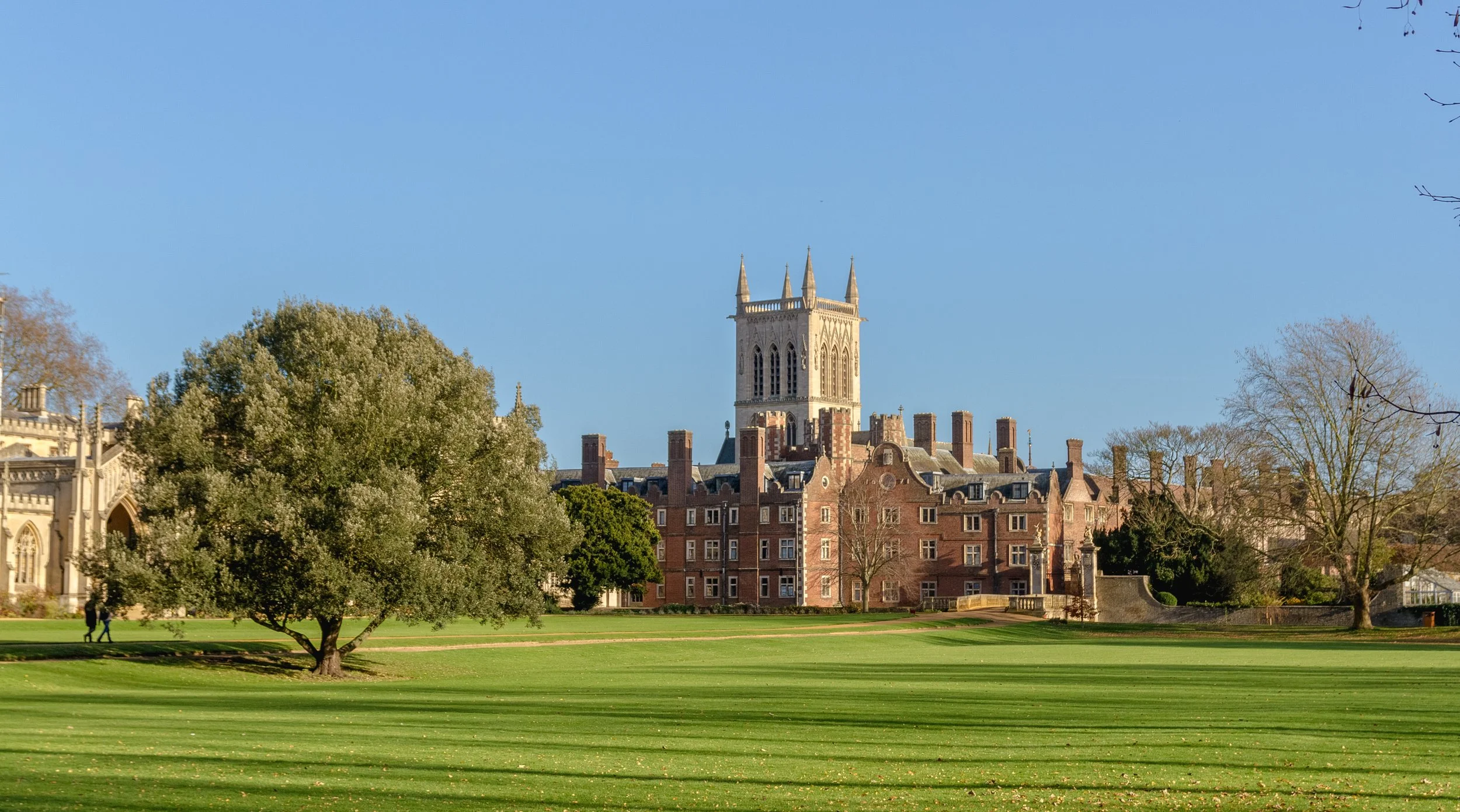
On October 1st, 2026, I will start my university life at Cambridge, studying chemical engineering and biotechnology at Saint Catherines college. I earnt my place this year after achieving the grades needed in my offer and after a long process to earn that offer. Here I will explain that process and gives some tips on how to get into Cambridge yourself.
Why Chemical Engineering?

I was pretty set on studying chemical engineering from when I chose my A-Levels. I always knew I wanted to be an engineer, as a career where maths and physics are at the centre of would suit me perfectly. It took me a little while to decide which branch to specialise in and I did consider general engineering courses, but at A-levels chemistry soon became my favourite subject and inspired me to have a look at chemical engineering. I just did what every career advisor would tell you to do and followed my passions.
As defined by the American Chemical Society [1], chemical engineering is the “production and manufacturing of products through chemical processes”. In other words, chemical engineering is the production of chemical products that are used in our day-to-day life (like bleach or even cheese) or for those that are used in the industrial setting (for example sodium hydroxide or ammonia) on the mass scale. This career path excited me, as the idea of running or planning whole chemical plants while operating massive machinery seems extremely exciting. As well as this, I have a passion for the environment and one of the biggest polluters is the chemical industry so I would like to help fix that.
Why Cambridge?

My application to Cambridge was a sort of “why not?”, since their course does not have year in industry, I wasn’t too sure I wanted to go there and (more importantly) doubted my ability to even get an offer from them. One of the big positives of studying chemical engineering at Cambridge is the extra “biotechnology” added to the course – different to chemical engineering at other universities. Biotechnology is the use of biological processes to make products and chemicals; the most common one being using yeast for brewing alcohol or making bread. When I went to the Cambridge open day, the professor talked about the genetic manipulation (changing the DNA loop) of E. coli bacteria to produce insulin for diabetes patients. This idea fascinated me, it seemed almost impossible to use a type of bacteria, which the public viewed as extremely dangerous, to make life saving medicine. I was really interested by this new concept explained to me and it really fuelled my ambition to get into Cambridge. If you are interested on an exact breakdown of the course at Cambridge attend the open day or have a look at the chemical engineering page on their website [2].
The ESAT

When I was applying to do Chemical Engineering, the admissions test was the ESAT. The ESAT is also used for Natural Sciences, Veterinary sciences and Engineering for Cambridge, as well as every engineering course, aeronautics and physics at Imperial College London. It is made up of 3 modules and depending on which course you do depends on which of those modules you are required to do. For Chemical Engineering the only required one is Maths 1, the other options are Biology, Maths 2, Chemistry and Physics. I chose Chemistry and Physics, because they corresponded to my A levels, I suggest you do the same. Each of the modules consist of 27 multiple choice questions and last 40 minutes.
The level of questions is similar to that of A-Level with a heavy emphasis on mathematics and problem solving. You are expected to be familiar with most of the topics on the A-Level course, so you may have to read ahead a little as you take the test in early year 13. An exact specification is on the UAT website [3] and I suggest you read all the resources that this has – they were really helpful to me. My revision for the ESAT mainly consisted of doing past papers, however since the ESAT was first introduced the year I took it the only available ones were specimen papers on the UAT website. So as well as those I did some NSAA and TMUA papers (TMUA for maths and physics and NSAA for physics and chemistry). With these multiple-choice style tests, it is important to familiarise yourself with the types if questions that will come up and the general time frame per module – I specifically struggled with the timings when I sat it, running out of time on both my Maths and Physics section.
An important thing to bear in mind when you are doing it, is that it is better to get a few right and take your time than rush through all the questions and answer them but not necessarily get them correct. Also remember it isn’t about getting all the questions right, just getting enough to secure yourself an interview, so there is no need to panic if you run out of time on one or two of the modules.
Interviews
From me and everyone else I know who applied to Cambridge, you will only hear if you are getting an interview 2-3 weeks in advance of the actual date (sometime in mid-December). My Chemical Engineering interview consisted of 2 hour-long online sessions each with two tutors from my college. I cannot discuss directly what happened and what we talked about, as part of the interview stage there is a document I had to sign saying I cannot discuss what happened publicly. However, the University of Cambridge has a good page on what to expect from their interviews [4].

I sat my interview at home and I recommend the same to you. It is good to be in a familiar space for comfort reasons and since it hadn’t been too long since the online learning of 2020-2021, I was used to the Microsoft teams setup. Obviously, it is best to have a clean background: no messy room, people walking through the background or a cluttered desk in front of you. Set up early and make sure that you have a good internet connection (don’t worry if it starts bugging in the interview, it won’t affect your chances of getting in). Right before I started my interviews I had about 10 minutes of spare time, if you have this too, I suggest doing something to calm the nerves, just to get you in a good headspace before you join the call. For me this meant blasting Bruno Mars and signing loudly (and badly) to try get rid of some of that nervous energy.
Which college you applied to depends on what you need to have with you at the interview. Most colleges just accept if you have a pen and paper to write down your ideas and working out on, but since pen doesn’t show up clearly on camera too much, they recommend a handheld white board (which I just borrowed from my school). When doing your interview, the most important thing to remember is to keep your cool. If you mess up (and you most likely will), just stay calm and listen to what the professors are telling you and then reattempt their question. In my interview I made a couple of silly mistakes, but did not get flustered, gave myself a few seconds to rethink and then reattempted the question. When they are interviewing you, they are looking for a future student that they will teach, they want someone who is keen on learning and has a good attitude. You do not have to be the second coming of Einstein to get a place at Cambridge, you just need to be a good student and that’s what they’re looking for.

It is very important to constantly speak out loud your thought processes. Since the professors aren’t inside your head, they cannot see what you are thinking, so if you are telling them what you are thinking they get a better and more rounded idea of how your thought processes work and this gives them a better idea of if you are suited to the course or not. The best advice I got given for my interview was to listen to the question, take a little bit of time (but not too much) to think about what the are looking for you to say and how you are going to approach the question, then start explaining your thoughts and how you will approach the problem. This technique really helped me in the interview and helped me convey my ideas precisely and effectively, while also making it semi-conversational. Another piece of advice is to have some water with you, it may seem small, but you will underestimate how much talking you do - and therefore how dry your mouth becomes.
Getting into Cambridge
I applied with the open college option meaning that I would randomly get put in college applications. I did this simply because I didn’t want to do any research into the different colleges and it made no difference to me where I went, it does not make a difference whether or not you select a college or go open your chance of getting in is the same either way. The year I applied to Cambridge there were 541 applicants for the chemical engineering course. 92 people got an offer, this is a 17% offer rate, which is low for any course. St Catherines rate was 25% (4 offers for 16 applications) so higher than the average but whether or not the college you apply to is higher or lower than the whole course average varies each year. I got all this data from the Cambridge application statistics [5] so if you are interested at looking at other course and colleges throughout the years feel free to have a look yourself. The minimum grade requirements for the course is A* A* A and usually they look for a maths double science combination. Because I did four A-Levels (Maths, Further Maths, Physics, Chemistry), my offer was A* A* A C - meaning I just had to pass my fourth and get the minimum requirement for any three of 4. In the end I got A* A* A* A*, so managed to get in and keep my offer, but at the end of the day my offer is the same as someone else who got A* A* A and not many people on the course will have straight A*s. As I said before, your offer is mainly dependent on how you cope in the interview so don’t be put of from applying to Cambridge if you have the minimum requirements for the course, because that is still enough.
References
American Chemical Society (ACS) (2025) Chemical Engineering. Available at: https://www.acs.org/careers/chemical-sciences/areas/chemical-engineering.html (Accessed: 6 November 2025).
University of Cambridge (2025) Chemical Engineering and Biotechnology, BA (Hons) & MEng. Available at: https://www.undergraduate.study.cam.ac.uk/courses/chemical-engineering-biotechnology-ba-hons-meng (Accessed: 6 November 2025).
UAT-UK (2025) Prepare – ESAT & TMUA. Available at: https://esat-tmua.ac.uk/prepare/ (Accessed: 6 November 2025).
University of Cambridge (2025) What to expect at your Cambridge interview. Available at: https://www.undergraduate.study.cam.ac.uk/apply/after/cambridge-interviews (Accessed: 6 November 2025).
University of Cambridge (2025) Application Statistics. Available at: https://www.undergraduate.study.cam.ac.uk/apply/statistics/1000 (Accessed: 6 November 2025).

Malachi is a dedicated Maths and Science tutor currently on a gap year with an offer to study Chemical Engineering and Biotechnology at the University of Cambridge. As a Tutor and Content Writer for Learn Science Together, he combines his strong STEM background with a passion for helping students succeed. Having achieved A* grades in Mathematics, Further Mathematics, Chemistry, and Physics at A Level, Malachi writes engaging articles that aim to inspire confidence, curiosity, and ambition in young learners pursuing science and mathematics.
